How to split 7 days between Rome, Florence and Venice
For a first trip, the most balanced version of this route is:
- Rome: 3 days
- Florence: 2 days
- Venice: 2 days
This gives Rome enough time for the major highlights, Florence enough space for its historic center and key art stops, and Venice enough time to experience more than just St Mark’s Square.
Day 1: Arrive in Rome and explore the historic center
Your first day in Rome should be intentionally light, especially if you are arriving from a long-haul flight. Rather than trying to schedule the Colosseum or Vatican immediately, use the day to settle in and enjoy Rome’s historic center on foot.
A simple first-day route could include the Pantheon, Piazza Navona, Trevi Fountain, and the Spanish Steps, depending on where you are staying.
Day 2: Ancient Rome and the Colosseum area
Your second day is the right time to tackle Ancient Rome. For most first-time visitors, the core combination here is the Colosseum, Roman Forum, and Palatine Hill. Start as early as possible, especially in spring and summer.
If you still have energy in the afternoon, head toward the Capitoline Hill area or walk into Monti for lunch and a slower afternoon.
Day 3: Vatican City, then train to Florence or late Florence arrival
For a seven-day version of this trip, there are two ways to structure the move from Rome to Florence. The cleaner option for most first-time visitors is to spend the morning in Vatican City, then take an afternoon or early evening train to Florence.
If the Vatican Museums are a priority, book the earliest slot you can reasonably manage. The Vatican is one of the most crowded cultural sites in Italy, and a morning visit gives you a better chance of enjoying the galleries and the Sistine Chapel before peak congestion.
Day 4: Florence’s Renaissance highlights
Florence is compact, which is a major advantage on a short trip. You can cover a lot in one day if you stay focused. For first-time visitors, this is the day to prioritize the city’s biggest Renaissance highlights.
A practical route would include the Duomo area, Piazza della Signoria, Ponte Vecchio, and at least one major museum. If art is a top priority, you may want to choose between the Uffizi Gallery and Accademia Gallery Florence rather than trying to rush both. If you have already read or plan to publish the Florence museum article, this is also where that content naturally connects.
End the day at Piazzale Michelangelo if you want one of the classic Florence views, especially around sunset. It is one of the best ways to slow the pace after a museum-focused afternoon.
Day 5: More Florence, then train to Venice
Your second Florence day can go in one of two directions, depending on your travel style. If you are especially interested in art and history, use the morning for whichever major sight you skipped the day before, whether that is the Uffizi Gallery, Accademia Gallery, or another museum in the center.
Then take an afternoon train to Venice. This is one of the most important pacing decisions in the itinerary. Going to Venice in the afternoon rather than late evening gives you time to settle in and enjoy the city at night, which is worth it.
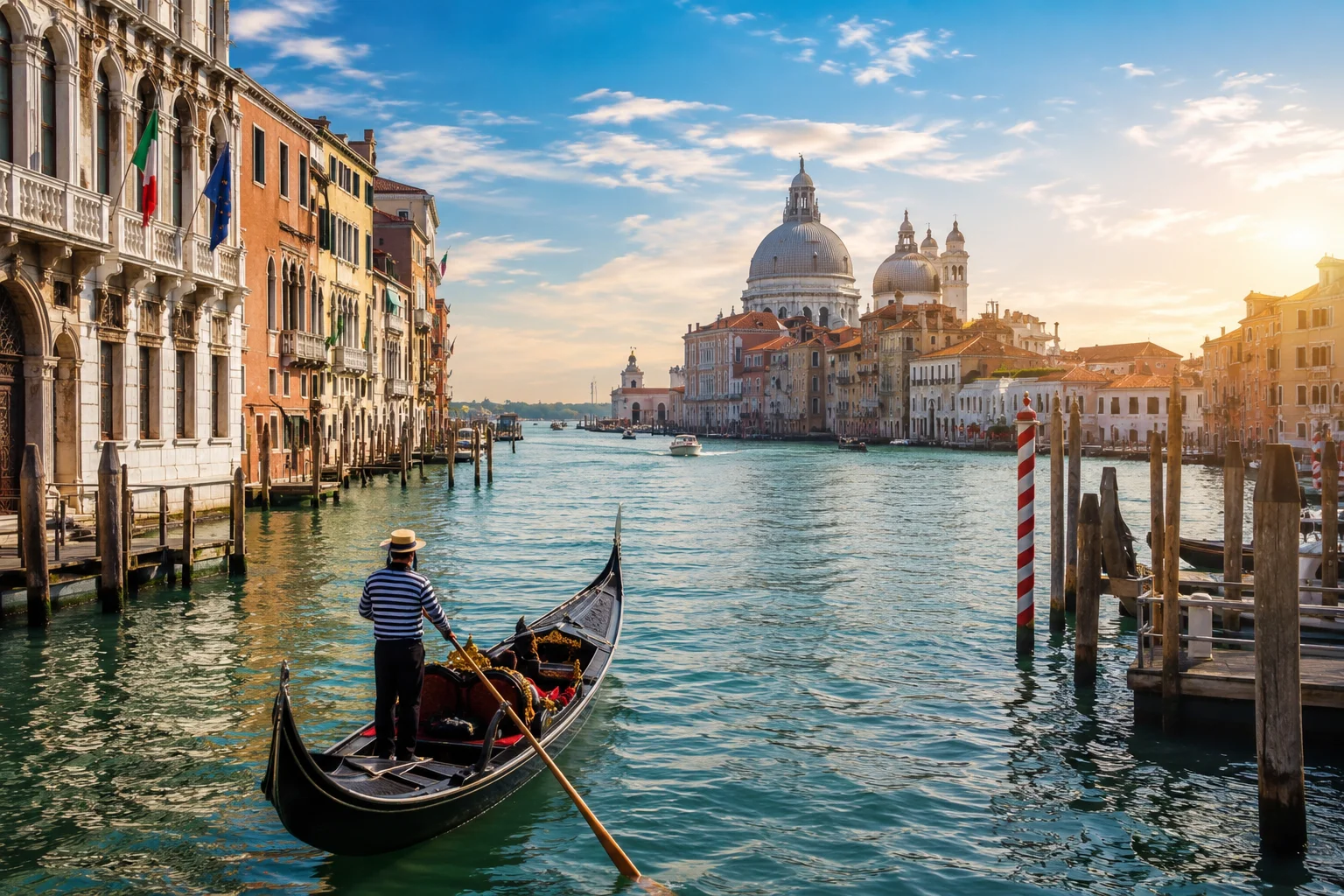
Day 6: Venice highlights and classic first-time sights
Your first full day in Venice should cover the essentials. For most first-time visitors, that means St Mark’s Square, St Mark’s Basilica, the Rialto Bridge, and time spent walking through the canals and smaller lanes between them.
If you want to visit the Doge’s Palace or enter St Mark’s Basilica, pre-booking is a good idea in busier months. The main point of a short Venice stay is not to “do everything,” but to balance a few headline landmarks with enough unscheduled time to absorb the city’s atmosphere.
Day 7: A final Venice morning before departure
On the last day, keep your plans realistic around your departure time. If you have a late flight or train, you may have time for one final stroll, a vaporetto ride, or a quick visit to a quieter area such as Cannaregio or Dorsoduro.
This is where a Rome-to-Venice route really pays off. Ending in Venice gives the trip a softer finish than returning to a busier city, and it avoids wasting time on a long backtrack south.















 English
 CAD
CAD